Bouldering crash pads
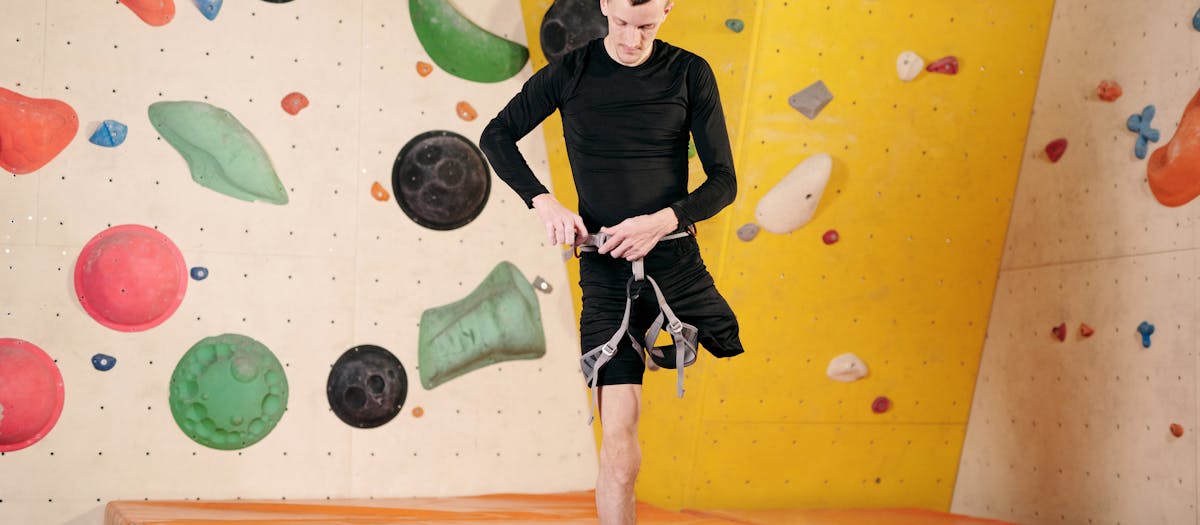
A crash pad is a portable folding foam mat you carry to an outdoor boulder and lay under the problem to cushion your landing. It is the most important safety item in outdoor bouldering, and it is the one piece of gear most beginner guides describe badly — ranking pads by brand rather than explaining what makes a landing safe. This silo does it the other way around: foam type, coverage area, fold style and carry weight, in plain terms.
First, the timing. You do not need a crash pad indoors — the gym floor is already a thick, fitted pad. Buy one when you start climbing outside. When you do, the four specs below decide whether the pad protects you and whether you can actually get it to the rock.
How to choose a crash pad
Four questions. Answer them and you will know which pad fits your climbing.
How is the foam built — baffle or taco?
Crash pads use a layered foam stack: a firm, dense closed-cell top layer that spreads the impact, over a softer open-cell base that absorbs it. How the pad folds shapes that stack. A hinge (or baffle) pad folds along a built-in seam — it lies flat with no soft spot at the fold, but the seam is a weak line if you land directly on it. A taco pad is one continuous slab bent in half — no seam to land on, but it fights to stay flat and is bulkier folded. For most beginners a hinge pad is the easier pad to live with.
How much ground does it cover?
Coverage is the open area of the pad, and bigger is safer because falls are rarely tidy. A standard pad covers roughly a square metre or a bit more. Highball problems (tall ones) and awkward landings call for more coverage, which usually means a second pad rather than one huge one — pads are designed to be butted together. Watch for the gap a single folding pad leaves at its own hinge; that gap is where ankles get rolled.
What does it weigh, and how does it carry?
You have to hike the pad in, sometimes a long way. Weight, shoulder straps, a hip belt and a way to strap your other gear to the pad all matter once the approach is more than a few minutes. A heavy pad that carries well can feel lighter than a light pad with thin straps. If the approaches near you are long, prioritise the carry system.
How durable is the shell and closure?
The outer fabric takes a beating from rock, grit and being dragged across the ground. Heavier denier fabric (a measure of thread thickness) lasts longer. Check the closure flaps that keep the pad shut and your gear in, and the corner stitching, which is the first thing to fail on a cheap pad.
Featured guides
The current published guides in this silo. More land each batch.
Landing next: Best budget crash pad, Best crash pad for highballs, and a crash pad for a home wall.
Using a pad safely
Buying the right pad is half of it. The other half is spotting and placement, and a pad does not replace either. A spotter is a person who stands behind the climber to guide a fall onto the pad and protect the head and neck — not to catch you. Position the pad under the likely fall zone, not just the start, and shift it as the climber moves across the problem. Cover gaps between multiple pads with a smaller pad or a folded jacket so a foot cannot drop through. None of this is complicated, but it is the part of crash-pad safety that gear alone cannot solve.
Common crash-pad mistakes
- Buying a pad for the gym. You do not need one indoors. Save the money for outdoor sessions.
- Choosing on coverage alone. A huge pad you cannot carry to the boulder protects no one. Match the pad to your approaches.
- Landing on the hinge. A folding pad has a softer line at its fold. Place it so your fall zone avoids the seam, or overlap a second pad over it.
- Skipping the spotter. The pad cushions the landing; the spotter protects your head. Both, every time.