Best bouldering crash pad
A crash pad is the gear that decides whether an outdoor fall is a non-event or an injury. The head-term roundups for this category mostly rank pads by brand and call it a day. This guide does the opposite: it explains the four specs that actually keep a landing safe — coverage, foam construction, fold style and carry weight — then applies them to a short list of pads, so you can choose the one that fits the falls you expect and the approaches you hike.
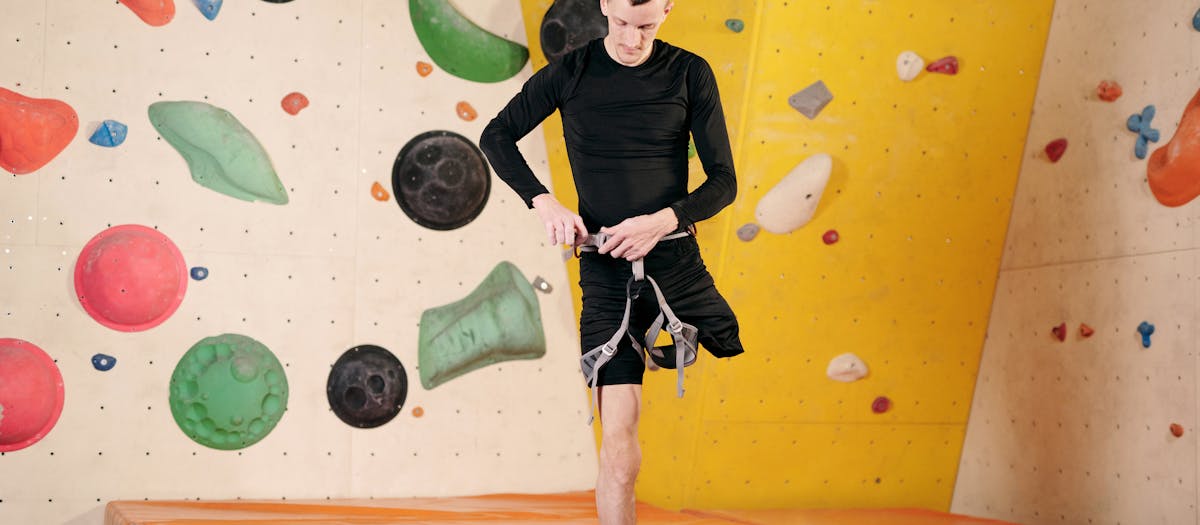
First, the timing, because it is the most common mistake. You do not need a crash pad for the gym; indoor floors are already padded. Buy a pad when you start climbing outdoors. If you are not there yet, the crash-pads hub and the starter guide are the better reads for now.
How to choose a crash pad
Four specs decide whether a pad protects you and whether you can get it to the rock. Run any pad through these before you look at price.
Foam construction — the layered stack
A crash pad is not one block of foam. It is a layered stack: a firm closed-cell top layer that spreads the impact across the pad so you do not punch straight through, over a softer open-cell base that absorbs the energy. A good pad balances the two. Too soft and you bottom out onto the ground; too firm and the pad does not give. This layered build matters more than the raw thickness number, so read how a pad is built, not just how many inches it claims.
Fold style — baffle (hinge) vs taco
How a pad folds shapes both the landing and the carry. A baffle, or hinge, pad folds along a built-in seam; it lies perfectly flat, but that seam is a softer line you want to avoid landing directly on. A taco pad is one continuous slab bent in half, so there is no seam to land on, but it is bulkier folded and tends to spring back open. Hybrid designs try to split the difference. For most beginners a hinge pad is the easier pad to live with, as long as you place it so your fall zone clears the fold.
Coverage — open area, and gaps
Coverage is the open footprint of the pad, and more is safer because real falls rarely land where you planned. A standard pad covers about a square metre or a bit more. The trap is the gap a single folding pad leaves at its own hinge, and the gaps between multiple pads — both are where ankles roll. The fix is overlapping a second pad over those gaps rather than buying one enormous pad you cannot carry.
Carry weight and system
You have to hike the pad in, sometimes far. Weight matters, but the carry system matters more: padded shoulder straps, a hip belt, and a flap or straps to lash your shoes, chalk and water to the pad turn a long approach from miserable to manageable. A slightly heavier pad that carries well beats a light pad with thin straps. If your local crags have long walk-ins, weigh the straps as heavily as the foam.
The pads compared
A short list of widely available crash pads, compared on the four specs above. Specs are verified against manufacturer listings and current Amazon product pages — no hands-on testing claims, just the build details that decide a safe landing.
| Best for | Coverage (open) | Foam construction | Thickness | Fold style | Weight |
|---|---|---|---|---|---|
| Best overall | 121 x 91 cm | Baffle / hybrid — closed-cell PE bonded to high-compression PU | — | Hinge | — |
| Best mid-size all-rounder | 48 x 36 in (122 x 91 cm) | Baffle / hybrid — 1-3-1 sandwiched (closed / open / closed) | 5 in (~13 cm) | Single fold (taco) | 14 lb (~6.4 kg) |
| Best budget | 48 x 36 in (122 x 91 cm) | Baffle / hybrid — dual-density open + closed-cell layering | 4 in (~10 cm) | — | — |
| Best for highballs | — | Baffle / hybrid — cross-linked closed-cell top, open-cell bottom | 12 cm (4.7 in) | — | 7.23 kg (~16 lb) |
| Best portable / approach pad | 122 x 91 cm | Baffle / hybrid — high-compression over low-compression foam | 10 cm (~4 in) | Single fold (taco) | — |
Our top picks
Best overall: Black Diamond Circuit Crash Pad

Best overall
Black Diamond Circuit Crash Pad
Black Diamond
- Coverage (open): 121 x 91 cm
- Foam construction: Baffle / hybrid — closed-cell PE bonded to high-compression PU
- Thickness: —
- Fold style: Hinge
- Closed size: —
- Weight: —
A hinge-fold, hybrid-foam pad with a 900D nylon face — a sensible do-everything pad for most boulderers.
Last checked 2026-05-20
Best mid-size all-rounder: Mad Rock Mad Pad Crash Pad

Best mid-size all-rounder
Mad Rock Mad Pad Crash Pad
Mad Rock
- Coverage (open): 48 x 36 in (122 x 91 cm)
- Foam construction: Baffle / hybrid — 1-3-1 sandwiched (closed / open / closed)
- Thickness: 5 in (~13 cm)
- Fold style: Single fold (taco)
- Closed size: 24 x 36 x 10 in
- Weight: 14 lb (~6.4 kg)
A standard-size taco pad with a 1-3-1 sandwiched foam stack — a balanced first pad for a session at the crag.
Last checked 2026-05-20
Best budget: Asana Focus Crash Pad

Best budget
Asana Focus Crash Pad
Asana
- Coverage (open): 48 x 36 in (122 x 91 cm)
- Foam construction: Baffle / hybrid — dual-density open + closed-cell layering
- Thickness: 4 in (~10 cm)
- Fold style: —
- Closed size: —
- Weight: —
The lowest-priced real climbing-brand pad found, with dual-density hybrid foam and metal cam-buckle closures.
Last checked 2026-05-20
Best for highballs: Black Diamond Mondo Crash Pad

Best for highballs
Black Diamond Mondo Crash Pad
Black Diamond
- Coverage (open): —
- Foam construction: Baffle / hybrid — cross-linked closed-cell top, open-cell bottom
- Thickness: 12 cm (4.7 in)
- Fold style: —
- Closed size: —
- Weight: 7.23 kg (~16 lb)
Black Diamond's oversized flagship — extra-thick 12 cm hybrid foam built to soak up the impact of higher falls.
Last checked 2026-05-20
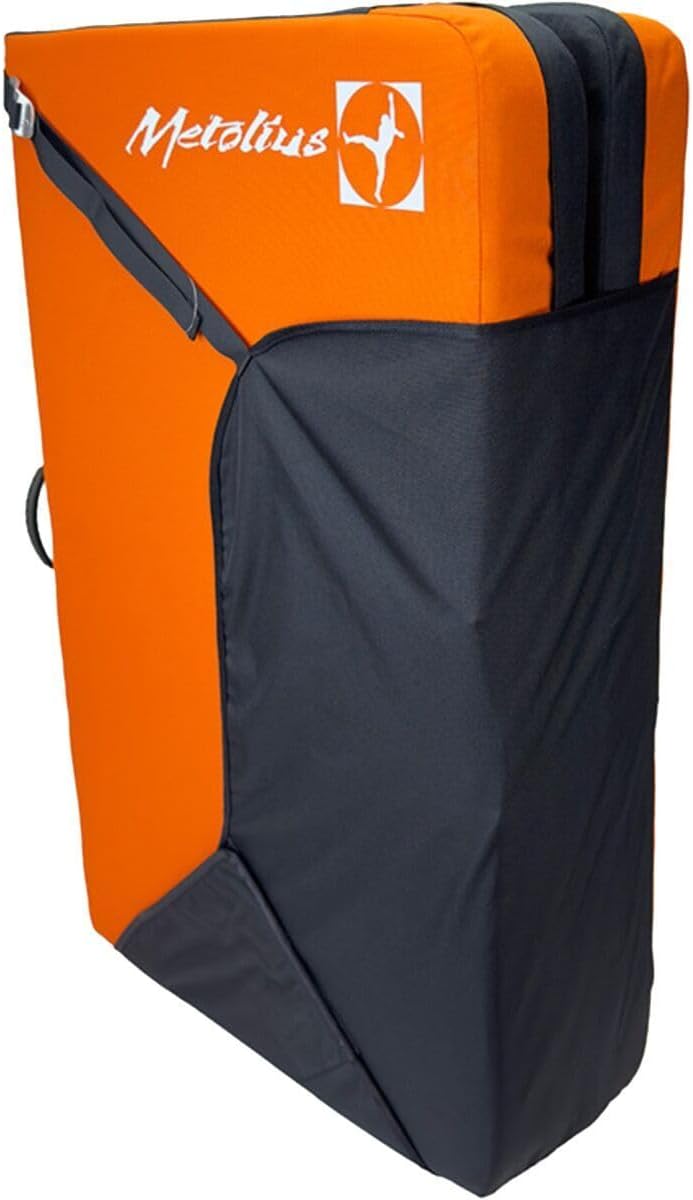
Best portable / approach pad: Metolius Session II Crash Pad
Best portable / approach pad
Metolius Session II Crash Pad
Metolius
- Coverage (open): 122 x 91 cm
- Foam construction: Baffle / hybrid — high-compression over low-compression foam
- Thickness: 10 cm (~4 in)
- Fold style: Single fold (taco)
- Closed size: 66 x 91 x 10 cm
- Weight: —
A 900D-shelled entry/approach pad with a backpack carry system — the classic first pad and easy hauler to the crag.
Last checked 2026-05-20
Who should buy what
First outdoor pad, short approaches
A single standard hinge pad is the right starting point. Prioritise a balanced foam stack and a solid closure, and do not overspend on coverage you will not use yet. You can always add a second pad as your climbing grows.
Long hikes to the boulders
Put the carry system first. A pad with a proper hip belt, padded straps and gear-lashing points is worth more than a lighter pad you dread carrying. The best pad is the one that still gets to the rock on a long approach.
Taller problems and tricky landings
Plan for two pads from the start, and choose pads that butt together cleanly so you can cover the fold line and the gaps. Coverage and overlap matter more here than any single pad spec. A dedicated highball guide is on the way in a later batch.
A pad is half the safety
Buying a good pad does not finish the job. Placement and spotting do the rest. Position the pad under the likely fall zone, not just the start, and move it as the climber crosses the problem. A spotter stands behind the climber to guide a fall onto the pad and protect the head and neck — they steer you, they do not catch you. Cover the fold line and any gaps between pads with a smaller pad or a folded jacket. None of this is hard, and all of it matters more than which brand name is on the pad.
Frequently asked questions
Do I need a crash pad for indoor bouldering?
No. Indoor gyms have thick, fitted floor padding, so you climb without your own pad. A crash pad is for outdoor bouldering, where you carry it to the rock and lay it under the problem. Buy one only once you plan to climb outside; for the gym it does nothing.
What is the difference between a baffle pad and a taco pad?
A baffle (hinge) pad folds along a built-in seam and lies flat with no soft spot, but the seam is a weak line if you land directly on it. A taco pad is one continuous slab bent in half, so there is no seam to land on, but it is bulkier and fights to stay flat. Beginners usually find a hinge pad easier to live with.
How big should a crash pad be?
A standard pad covers roughly a square metre or a little more, which suits most low and moderate problems. Taller problems and awkward landings call for more coverage, which usually means adding a second pad rather than buying one huge one — pads are designed to butt together. Match coverage to the falls you expect.
How thick should a bouldering crash pad be?
Most pads run about 3 to 5 inches thick. Thicker is not automatically better — too soft and you bottom out, too firm and it does not absorb. The layered build matters more than raw thickness: a firm closed-cell top spreads the impact and a softer open-cell base absorbs it. Look at the foam construction, not just the number.
How heavy is a crash pad, and does weight matter?
Pads run roughly 9 to 16 pounds depending on size. Weight matters most when you have to hike the pad in. A heavier pad with a good carry system, shoulder straps and a hip belt, can feel easier to move than a light pad with thin straps. If your local approaches are long, prioritise the carry system over shaving a pound.
Can one crash pad be enough?
For low, clean landings, yes. One well-placed pad covers a lot of beginner outdoor bouldering. As problems get taller or landings get uneven, a second pad to cover gaps and the fold line becomes the safer setup. Many climbers start with one and add a second rather than buying a single oversized pad.
Does a crash pad replace a spotter?
No. The pad cushions the landing; a spotter guides your fall onto the pad and protects your head and neck. They do different jobs and you want both. A spotter does not catch you — they steer a falling climber toward the padded zone and keep you from tipping off the back of the pad.
Can I use a bouldering crash pad under a home wall?
Yes, and many people do. A crash pad makes a flexible landing for a low home wall, though dedicated floor padding gives more even, full-coverage protection for a fixed wall. If you already own a pad for outdoor climbing, it is a reasonable home-wall landing to start with. The home-wall silo covers landing options in more detail.