Bouldering training
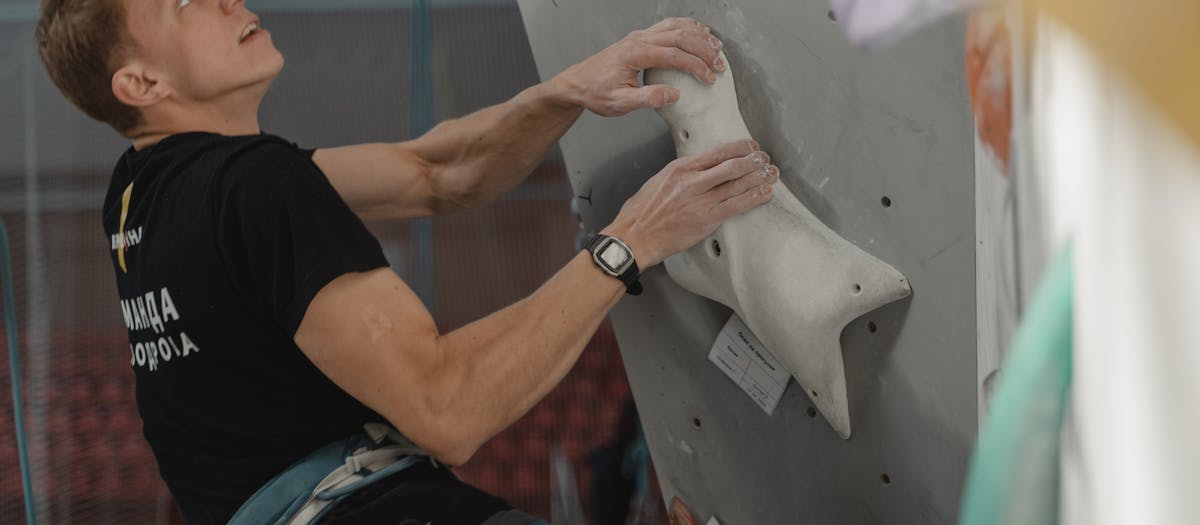
Training is where bouldering gets people hurt, almost always by starting too soon. This silo covers the gear — hangboards, grippers, finger trainers — but it leads with the timeline, because the right answer for most beginners is to not buy any of it yet. The single biggest thing you can do for your climbing in the first year is climb, rest, and let your fingers catch up at their own pace.
Why the timeline matters
When you start climbing, your muscles get stronger quickly — within weeks you can pull harder than your hands are ready for. The connective tissue in your fingers, the tendons and the pulleys that hold them against the bone, adapts on a much slower clock, often many months. A hangboard concentrates load on exactly those structures, so using one before they have caught up is asking for a strain or a pulley injury. Climbing, by contrast, loads your fingers in short bursts with rest between, which is how the tissue adapts safely. The wait is not caution for its own sake; it is matching the training to what your body can absorb.
The beginner training plan
For most of your first year, this is the whole plan, and it works.
- Climb two to three times a week, with rest days between sessions.
- Warm up with gentle problems and some easy hangs before you try anything hard.
- Push with your legs. Bouldering is a footwork sport before it is a strength sport. Keep your arms straighter than feels natural.
- Stop when your fingers ache. Aching fingers are the signal to rest, not to push through.
- Manage your skin. Splits and flappers mean you climbed too long. Tape, file rough spots, and give skin time to heal.
- Rest properly. Strength is built on rest days, not on the wall. More sessions is not more progress.
Featured guides
The current published guides in this silo. More land each batch.
Landing next: Best hangboard for beginners, Best finger-strength trainer, Captains of Crush grippers, and the best climbing training board.
The gear you will grow into
Once you have climbed consistently for a year and your fingers have adapted, training gear has a real place. Here is what each tool does, so you know it when the time comes.
Hangboards
A hangboard is a board of edges and pockets you hang from to build finger strength on specific grip types. It is the most effective finger-training tool and the easiest to overdo. A portable hangboard is a smaller version you can hang in a doorway or take to the gym to warm up on. Even then, start with bigger edges, short hangs, and full rest.
Grippers
A torsion-spring gripper (the Captains of Crush style) trains crushing grip — closing the hand against resistance. It builds general hand strength and is gentler on the finger pulleys than a hangboard, which makes it a lower-risk option, though it trains a grip that is not exactly what climbing uses.
Finger trainers and rehab tools
Small devices for finger and forearm strength, and for rehab and prehab — extensor bands that train the opposing muscles to balance all that gripping, and grip-strength tools with adjustable resistance. These are most useful for injury prevention and recovery, which is a conversation to have with a physio rather than a purchase to rush.